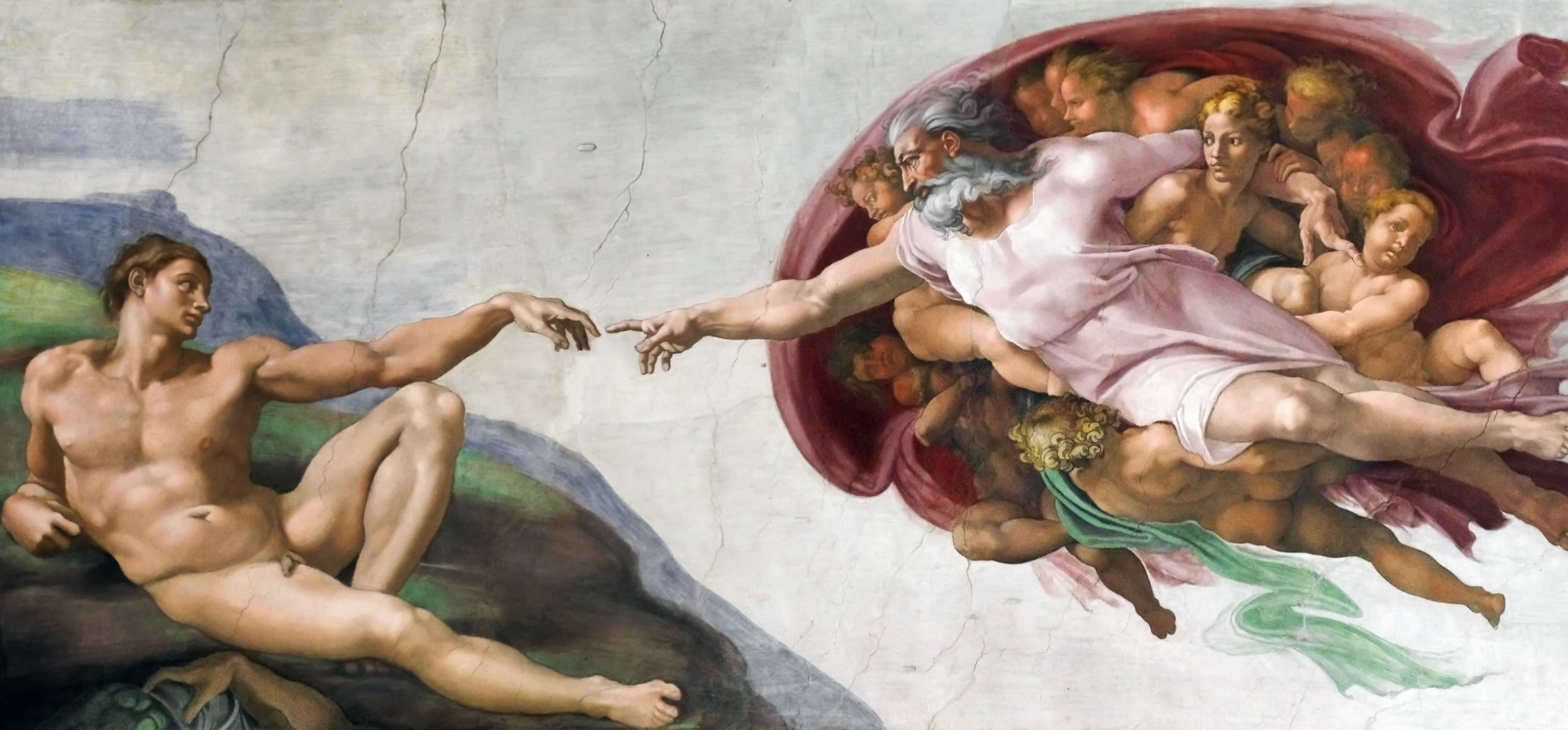
Genesis tells us that God created humanity in His image: “male and female He created them” (Genesis 1:27). Genesis 5:1–2 makes the same point: God made humanity in His likeness, created them male and female, blessed them, and named them Man.
This tells us something important about what it means to be human. Men and women together reflect the image of God. Scripture presents this truth in at least three dimensions: we were created for personal relationships, men and women possess equal value and importance, and they have complementary roles.
These truths are rooted not merely in culture but in creation itself.
Created for Relationships
God did not create us to live as isolated individuals. From the beginning, we were designed for relationships. Our identity develops within a context of relationships, commitments, and community.
We see this in families, friendships, and especially in the church, the spiritual family of believers. We also see a unique expression of relational unity in marriage.
Genesis 2:24 tells us that a man leaves his father and mother, is joined to his wife, and the two “become one flesh.” Jesus affirms this in Matthew 19:6, and Paul uses the same language in Ephesians 5 to describe the relationship between Christ and His church.
Marriage, then, involves more than physical union. Ideally, husband and wife grow toward a deeper unity of spirit, soul, and body. Their thinking, desires, choices, and lives increasingly become intertwined.
This relationship gives us a finite picture of a much greater spiritual reality. God Himself exists eternally as Father, Son, and Holy Spirit. Within the Trinity there is perfect love, fellowship, communication, unity, and honor.
Genesis 1 even hints at this plurality when God says, “Let Us make man in Our image” (Genesis 1:26). Jesus speaks of this eternal relationship in John 17 when He refers to the glory and love He shared with the Father before the foundation of the world.
Marriage is certainly not an exact picture of the Trinity. God is infinitely greater than anything in human experience. Still, marriage gives us a glimpse of unity and diversity existing together.
Marriage is not the only way to reflect this truth. Jesus was never married, and Paul taught that singleness can provide special opportunities for service to God (1 Corinthians 7). The church itself is a family in which many different people become one body in Christ.
Whether married or single, we were created for relationships.
Equal in Personhood and Importance
The second biblical principle is equality in personhood. Men and women are equally created in God’s image. Therefore, they are equally valuable to God and equally worthy of dignity and honor. Neither sex is spiritually superior to the other. This was a radical idea in the ancient world, where women were often treated as inferior. Scripture gives us a very different picture.
Proverbs 31 praises the godly woman and says her “worth is far above jewels.” First Peter 3:7 commands husbands to honor their wives. Spiritual gifts are also given by the Holy Spirit to believers according to His will so that they can serve one another and build up the body of Christ (1 Corinthians 12:11; 1 Peter 4:10).
The New Covenant gives us another picture of this equality. Baptism became the sign of identification with God’s people for both men and women. Both are full members of Christ’s body. Paul states the principle clearly in Galatians 3:27–28: “There is neither Jew nor Greek, there is neither slave nor free man, there is neither male nor female; for you are all one in Christ Jesus.” Paul is not saying that all human distinctions disappear. Rather, he is saying that these distinctions do not determine our value or standing before God.
Our culture often measures worth according to power, status, achievement, or influence. Scripture gives us a better standard. God’s evaluation determines our true value, and He treasures men and women equally.
Equality and Different Roles
Equality, however, does not require sameness. Scripture presents men and women as equal in personhood while also describing different roles within marriage. These two truths are often difficult for our culture to hold together because we tend to assume that differences in authority must imply differences in value. But the biblical model does not require that conclusion.
Consider the Trinity: the Father, Son, and Holy Spirit are fully divine and equal in deity and importance, yet Scripture describes them carrying out different roles. In creation, the Father initiates, the Son carries out His work, and the Spirit sustains. In redemption, the Father sends the Son, the Son willingly accomplishes the work of salvation, and the Spirit comes to empower God’s people.
Different roles do not mean different value.
This principle to marriage. Ephesians 5 calls wives to submit to their husbands and commands husbands to love their wives “just as Christ also loved the church and gave Himself up for her.”
Biblical headship, therefore, cannot rightly mean selfish domination. Christ is the model. His leadership is marked by sacrificial love.
The Fall Distorted What God Designed
Genesis also helps explain why relationships between men and women are often so difficult. Sin did not create human relationships; it corrupted them. The Fall brought conflict, selfishness, domination, resentment, and pain into what God had designed for harmony.
Adam’s work existed before the Fall, but afterward his work became painful and difficult. Eve’s role in bearing children existed as part of God’s original design, but childbirth became painful. In the same way, the relationship between husband and wife became distorted.
The problem, then, is not simply that men and women are different. The problem is that fallen people misuse those differences. Men can turn leadership into domination, becoming selfish, harsh, or passive. Women can respond with resentment, competition, or passivity. All of these are distortions of God’s intention.
But redemption begins reversing the effects of the Fall. This is why the commands of Ephesians 5 are so important. The husband is not told to control his wife but to love her sacrificially. He is to seek her good, honor her, and place her interests above his own.
Likewise, the wife’s submission should not be understood as mindless obedience or silence. A wife is not called to stop thinking, contributing, questioning, or offering wisdom. She can disagree with her husband and point out when she believes he is wrong.
The goal is neither domination nor passivity. A husband should pursue loving, thoughtful, and considerate leadership. A wife should pursue active, intelligent, and willing support. Both are called to put away selfishness and seek the good of the other.
Unity in the Midst of Difference
Our culture often tells us that equality requires eliminating distinctions. Scripture offers another vision: unity without uniformity.
Men and women share the same dignity because both bear God’s image. Both receive salvation through Christ. Both receive spiritual gifts. Both belong fully to the body of Christ. Both are called to know God, serve Him, and glorify Him. Yet equality does not require men and women to become interchangeable. The biblical vision is one of complementarity. Our differences can become opportunities to serve one another rather than compete with one another.
Because we live in a fallen world, none of us reflects this design perfectly. Marriages fail. Relationships are wounded. People misuse authority, resist responsibility, and carry regrets from the past. But followers of Christ are not called to remain trapped by guilt and regret. We receive the grace and forgiveness of God and press forward into what He is calling us to become.
Ultimately, biblical manhood and womanhood are not about proving who is more important. They are about learning to reflect God’s character through relationships marked by love, honor, service, responsibility, and grace. When men and women live this way, our differences need not divide us. Instead, they can point beyond us to the God whose image we were created to bear.
To explore this topic more deeply and discover how to thoughtfully answer the questions below, subscribe to Ken Boa Reflections on Substack.
Questions for Reflection
- How does being created in the image of God shape the way you view the value and dignity of both men and women?
- Why is it important to understand that biblical equality does not necessarily mean sameness? How can differences become opportunities for mutual service rather than competition?
- In what ways has the Fall distorted God’s intention for relationships between men and women? Where have you seen the effects of selfishness, domination, resentment, or passivity in relationships?
- Whether you are married or single, how can you more faithfully reflect God’s character through relationships marked by love, honor, service, responsibility, and grace?