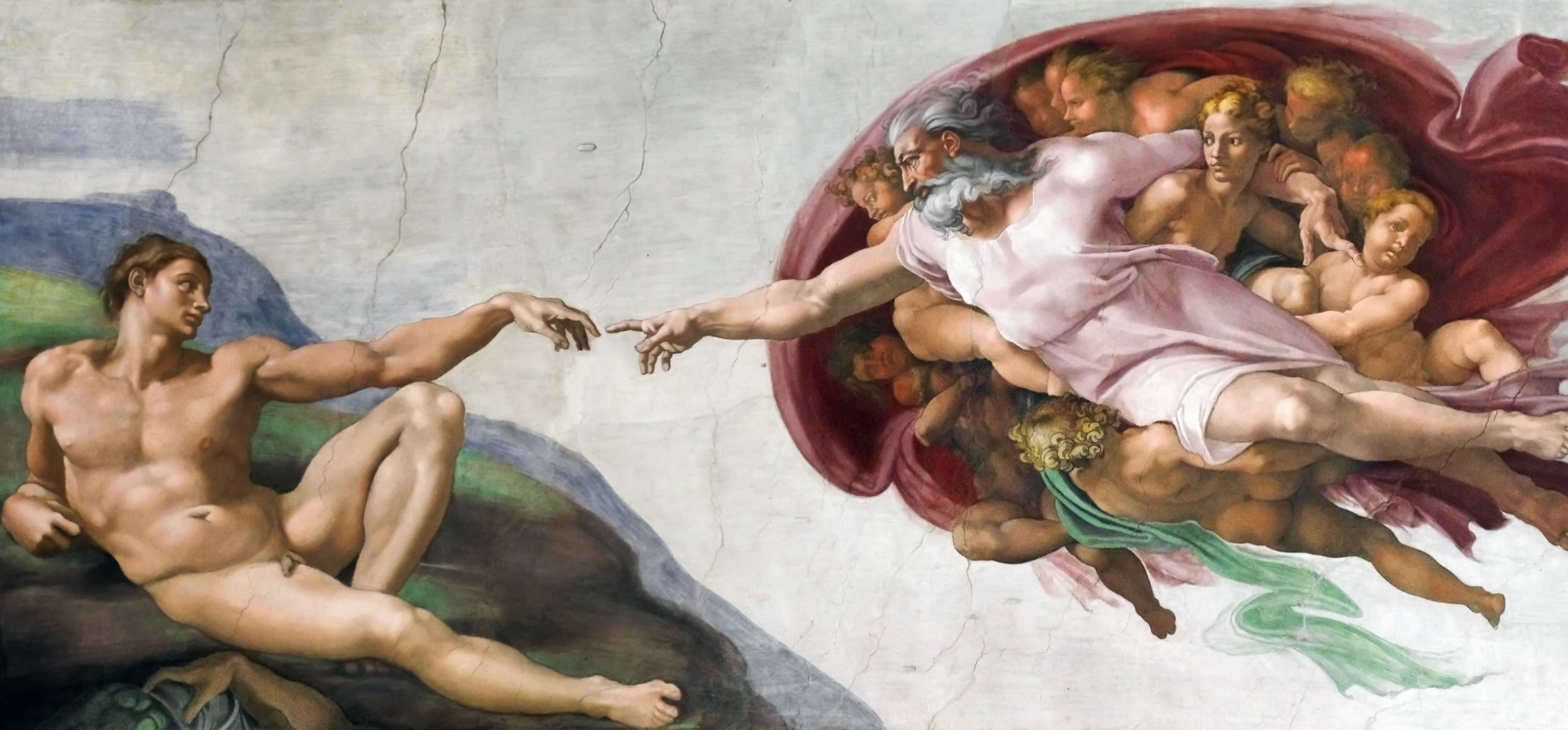
Why did God create us? Why did He make us like Himself? And how should that shape the way we live?
These questions lead us to one of the most important issues we can consider: our purpose. Most people I encounter have never carefully wrestled with the question, Why am I here? Yet I believe every one of us has a unique contribution to make in God’s economy.
Discovering that purpose is usually a process. I encourage people to make a prayerful search and ask God to give them greater clarity. Part of that process involves looking back over your life. Consider the significant people, events, lessons, abilities, desires, and opportunities God has used to shape you. Often, when we look back, we see patterns we could not recognize when we were living through them.
Our purpose is a divine-human process. God works in us by His grace, but He also calls us to cooperate with what He is doing. And the more clearly we understand His promises for our future, the more meaning we discover in the present.
Created for God’s Glory
Scripture teaches that human beings are the pinnacle of God’s creative activity. Men and women have been created in His image and likeness. This gives every human life extraordinary significance.
But we must begin with an important truth: God did not need to create us.
Before the universe existed, there was perfect love, fellowship, and joy among the Father, Son, and Holy Spirit. Jesus speaks of the glory He shared with the Father “before the world was” (John 17:5). God was not lonely. He was not bored. He did not create us because something was missing in Him.
Rather, God freely chose to create us for His glory.
Isaiah 43:7 speaks of those whom God created for His glory, and 1 Corinthians 10:31 tells us, “Whatever you do, do all to the glory of God.”
This truth has enormous implications for our purpose. We were made to glorify God, but doing so does not diminish us. In fact, it fulfills us. God has designed reality so that when we seek His glory rather than our own, we discover a deeper joy than we could ever gain by living for ourselves.
The world tells us to find significance through wealth, accomplishments, position, appearance, or the approval of others. But these are unstable foundations. There will always be someone who has more money, greater influence, or more impressive achievements.
When our significance depends on comparison, we will never have enough.
Our true significance comes from our Maker. When we understand this, we become increasingly free from the need to impress others. Instead of using people to strengthen our own sense of worth, we become free to love and serve them.
What Does It Mean to Bear God’s Image?
Genesis 1:26 tells us that God created humanity in His “image” and “likeness.” Simply put, this means we are like God in certain ways and have been created to represent Him.
Throughout church history, Christians have emphasized several aspects of the image of God. Some have focused on qualities within us, such as our ability to reason. Others have emphasized our capacity for relationships. Still others have focused on our calling to exercise responsible rule over creation.
I believe all of these are parts of a larger whole.
We reflect God intellectually and spiritually. We have the ability to reason, create, communicate, and make meaningful choices. We are relational beings who can know God and one another. We have also been given the responsibility to cultivate and care for the created world.
There are moral dimensions as well. We were made to reflect God’s righteousness and goodness. Our bodies also allow us to express qualities that reflect Him. God does not have physical eyes, but He sees. He does not need ears, but He hears. He does not have a human mouth, but He speaks. Through our bodies, we communicate, create, love, serve, and shape the world around us.
In all these ways, human beings uniquely represent God within His creation.
The Image Distorted—but Not Destroyed
Of course, something has gone terribly wrong.
The Fall distorted the image of God in humanity, but it did not erase it. Genesis 9:6 and James 3:9 both affirm that human beings still bear God’s likeness after sin entered the world.
We can see the distortion everywhere. Our moral character no longer reflects God’s holiness as it should. Our minds are clouded by falsehood and selfish ambition. Our speech often fails to honor God. Our relationships become marked by pride, manipulation, and self-interest rather than love.
Yet the image remains.
And if we want to see what true humanity looks like, we should look to Jesus Christ. He is the perfect image of God and the fullest expression of what humanity was intended to be.
The good news is that God is restoring His image in those who belong to Christ. Second Corinthians 3:18 tells us that we “are being transformed into the same image from glory to glory.” Romans 8:29 says that God’s purpose is for us to become “conformed to the image of His Son.”
This is part of our purpose now. God is not merely interested in what we accomplish. He is shaping who we are becoming.
Being precedes doing.
Our activities matter, but they flow from something deeper. God’s purpose is to transform us increasingly into the likeness of Christ so that our lives reflect His character in everything we do.
The Dignity of Every Human Life
Being made in God’s image also gives every person an extraordinary dignity that cannot be earned or taken away.
Our worth is not determined by intelligence, wealth, productivity, age, health, race, accomplishments, or social position. It rests in the unchanging character of the God who made us.
This has profound consequences for how we treat other people. Every human being bears God’s image, even though that image has been damaged by sin. Therefore, every person deserves dignity and respect.
If we deny humanity’s unique status as God’s image bearer, we will eventually reduce the value of human life. But Scripture calls us to define ourselves upward rather than downward. We are more than highly developed animals. We are spiritual beings created by God, for God, and in the image of God.
That brings us back to the question of purpose.
You were created to glorify God, to know Him, to become increasingly like Christ, and to represent Him in the particular places where He has placed you. Your relationships, abilities, experiences, work, resources, and opportunities can all become arenas in which His character is displayed.
Can you glorify God in your finances? In your work? In your relationships? In the use of your time? In the way you treat your neighbor?
The answer is yes. There is no area of life in which God cannot be glorified.
And as we increasingly live for the purpose for which we were created, we discover something surprising: the life centered on God is ultimately richer than the life centered on self. As David wrote, “In Your presence is fullness of joy; in Your right hand there are pleasures forever” (Psalm 16:11).
We find our lives when we stop making ourselves the center of them. Our deepest purpose, dignity, and joy are found in the One whose image we bear.
To explore this topic more deeply and discover how to thoughtfully answer the questions below, subscribe to Ken Boa Reflections on Substack.
Questions for Reflection
- How does knowing that you were created in the image of God change the way you understand your identity, value, and purpose?
- As you look back over your life, what people, experiences, abilities, and desires seem to reveal patterns in how God has been shaping your unique purpose?
- In what areas are you tempted to find significance through achievement, possessions, comparison, or the approval of others rather than through your relationship with God?
- If God’s purpose is not only to work through you but also to transform you into the likeness of Christ, what might He be inviting you to become—and to do—in this season of your life?