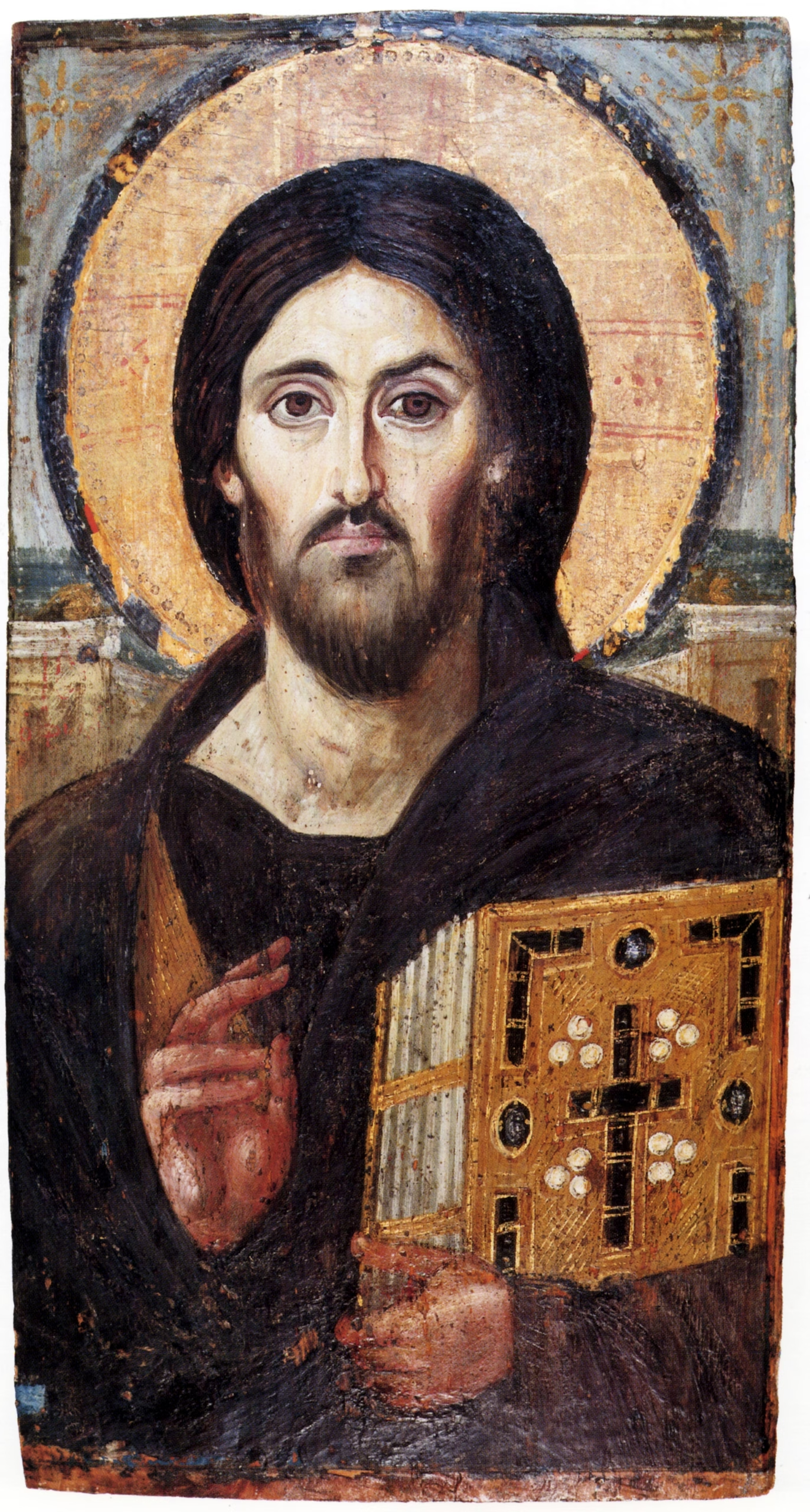
The Christian faith is not primarily a system of ideas, moral teachings, or religious practices. It is centered on a person—Jesus Christ. This distinction is essential. Unlike other worldviews that can be reduced to abstract principles or philosophical systems, Christianity cannot be separated from the identity of Christ Himself. His teaching carries authority not merely because of its excellence, but because of who He is: God incarnate.
Throughout history, many have attempted to isolate the “historical Jesus” from the “Christ of faith,” as though His life and His claims could be divided. Yet these efforts consistently fall short. The reason is simple: Jesus’ words and works are inseparable from His identity. He continually directed attention to Himself, asking the most penetrating question any person can face: “Who do you say that I am?” This is not merely a theological inquiry but a personal and unavoidable decision. Every individual must ultimately respond to it.
In the first century, people offered various answers. Some believed He was John the Baptist returned, others Elijah, and still others one of the prophets. Today, similar speculation continues. Jesus is often regarded as a moral teacher, a spiritual guide, or one voice among many religious options. In a culture shaped by relativism and pluralism, it is widely accepted that there are many paths to God. To suggest otherwise is often seen as narrow or intolerant. Yet this perspective stands in direct contrast to the claims of Christ and the testimony of Scripture.
The growing acceptance of multiple paths to God has even influenced those within the Christian community. A significant number of people who profess faith in Christ now affirm that salvation can be found through other means. This reflects a troubling loss of discernment. The issue is not merely philosophical; it strikes at the heart of the gospel. If there are many ways to God, then the coming of Christ—and especially His death—becomes unnecessary.
This leads to a critical question: Why was it necessary for Jesus to come as both God and man? Why was His death essential? The Scriptures are clear that if righteousness could be achieved through human effort, then Christ’s sacrifice would have been pointless. The incarnation and crucifixion reveal that humanity cannot bridge the gap between itself and God. That gap is too great, and the consequences of sin too severe. Only God Himself could provide the solution.
The doctrine of the God-man lies at the center of the Christian message. Jesus Christ is fully God and fully man—two natures united in one person. His humanity is genuine and complete. He experienced the full range of human life, including weakness, limitation, and temptation. Yet He remained without sin. At the same time, His deity is equally complete. He is not merely a representative of God but God Himself in human form. This union is not a temporary arrangement but a permanent reality. The eternal Son took on human nature and continues to exist as the God-man.
This truth carries profound implications. Because Jesus is fully human, He can truly identify with us. He understands our struggles, our temptations, and our suffering. Because He is fully divine, He has the power and authority to save. He alone can reconcile humanity to God. His life reveals God to us, and His death provides the means by which we are restored to Him.
The necessity of Christ’s death is rooted in both God’s justice and His love. Sin is not a trivial matter; it is a rebellion against a holy God. Justice demands that sin be addressed. At the same time, God’s love moves Him to provide a way of redemption. In Christ, these two realities meet. On the cross, Jesus bore the penalty for sin, satisfying the demands of justice while extending the offer of grace. His resurrection confirms the sufficiency of His work and the reality of new life.
Understanding the person of Christ is not merely an intellectual exercise. It is deeply practical and relational. Jesus is not only the Lord over all creation but also the Lord who desires a personal relationship with each of us. He is both transcendent and intimate—ruling the universe while inviting us into fellowship with Him. This dual reality challenges us to move beyond a distant or abstract view of God and to embrace a living, dynamic relationship with Christ.
The revelation of God in Christ demonstrates His character in a unique and compelling way. Through Jesus, we see the grace, compassion, and love of God made visible. His life reflects the heart of the Father, showing that God is not indifferent to our condition but deeply concerned for our well-being. The incarnation is the ultimate expression of God’s desire to draw near to us.
At the same time, there is an element of mystery in these truths. The union of divine and human natures in one person transcends our full understanding. Similarly, the reality that Christ exists in a resurrected body while also being omnipresent stretches the limits of human comprehension. These doctrines are not contradictions but mysteries—truths that are coherent yet beyond our ability to fully grasp.
The appropriate response to such mystery is not to reduce it to something manageable or to reject it because it cannot be fully explained. Rather, it is to embrace what Scripture reveals with humility and trust. Faith does not eliminate questions, but it acknowledges that God’s wisdom exceeds our own. In this way, we learn to hold these truths in tension, allowing them to shape our understanding without demanding that they conform to our limitations.
Another important aspect of Christ’s identity is the permanence of the incarnation. When the Son of God took on human nature, it was not a temporary act. It was a decisive and enduring event. There is now a glorified human being in heaven—Jesus Christ—who will return in the same manner in which He ascended. This continuity underscores the significance of the incarnation and its lasting impact on both heaven and earth.
Furthermore, the work of Christ bridges the gap between God and humanity in a way that transforms our entire existence. Our lives are no longer defined merely by our circumstances or achievements but by our relationship with Him. In Christ, we find not only forgiveness but also purpose, identity, and hope. He becomes the center of our lives, shaping our values, priorities, and direction.
This understanding calls for a deeper exploration of what Scripture teaches about Christ. Rather than relying on cultural assumptions or personal opinions, we are invited to examine the testimony of the Bible—the Gospels, the book of Acts, the epistles, and even the Old Testament, which anticipates the coming of the Messiah. Through this study, we gain a clearer and more comprehensive picture of who Jesus is.
Ultimately, the question of Christ’s identity is not one that can be ignored. It demands a response. To recognize Him as the God-man is to acknowledge His authority and to submit to His lordship. It is to move from mere curiosity or admiration to trust and commitment. This response is not simply a one-time decision but the beginning of a lifelong journey of knowing Him more deeply.
In this journey, we discover that Christ is both the foundation and the fulfillment of our faith. He reveals God to us, reconciles us to God, and sustains us in our relationship with God. As we grow in our understanding of who He is, our lives are gradually transformed. Our perspective shifts, our desires are reshaped, and our purpose becomes aligned with His.
Thus, the study of Christ is not an abstract pursuit but a vital and transformative endeavor. It invites us into a deeper awareness of God’s nature and a more intimate relationship with Him. And it continually brings us back to the central question that defines our faith and our lives: Who do you say that He is?
To explore this topic more deeply and discover how to thoughtfully answer the questions below, subscribe to Ken Boa Reflections on Substack.
Questions for Reflection
- “Who do you say that Jesus Christ is?” In what ways have your beliefs about Christ been shaped more by culture, opinion, or preference than by the witness of Scripture?
- Christ’s authority flows from His identity as God incarnate. How does your understanding of who Jesus is influence your trust in His words and your obedience to His teachings?
- Why is it essential that Jesus is both fully God and fully man, and how does this truth affect your understanding of salvation?
- Christ is not only cosmic Lord but also personal Lord. In what ways are you experiencing (or resisting) a deeper, more intimate relationship with Christ in your daily life?