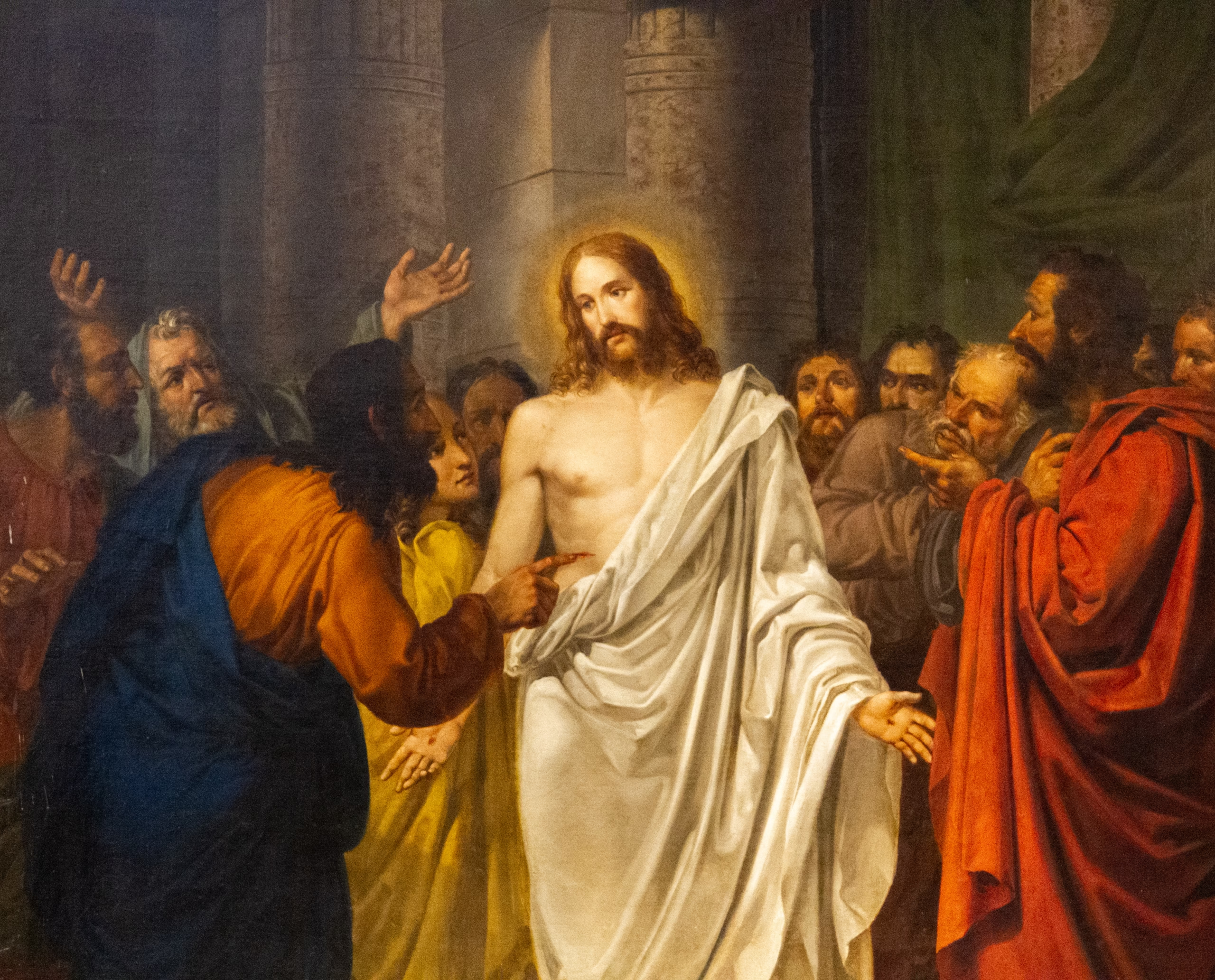
The person and work of Jesus Christ stand at the very center of the Christian faith. When we consider who Christ is, we are immediately drawn into one of the most profound and mysterious truths in all of Scripture: that Jesus is both fully God and fully man. This is not a peripheral doctrine—it is essential to understanding the meaning of His life, His death, and His ongoing work on our behalf.
To grasp the significance of Christ, we must hold together these two realities without diminishing either one. On the one hand, Jesus is fully human. This means that He did not merely appear to be a man or act like one; He truly entered into the human condition. He experienced hunger, fatigue, sorrow, and temptation. He lived within the limitations of time and space. This full humanity was necessary because His mission required genuine identification with us. Only as a true man could He represent humanity, suffer in our place, and offer Himself as a real sacrifice for sin.
At the same time, Christ is fully divine. This truth is equally essential. If Jesus were only human, then His death, however noble, would not have been sufficient to atone for the sins of the world. Sin, by its very nature, is an offense against the character of God. Because God is infinite, the weight of sin carries an infinite dimension. Therefore, only One who is fully God could provide a sacrifice of infinite worth—one that could fully satisfy the demands of divine justice.
This union of deity and humanity in one person is what makes the atonement possible. Jesus bridges the gap between God and humanity. As man, He can stand in our place; as God, He has the power and authority to accomplish what no mere human could do. The cross, then, is not simply an example of love or sacrifice—it is the decisive act through which Christ paid for the sins of all people, past, present, and future.
Scripture affirms this profound truth in clear yet mysterious language. We are told that “all the fullness of Deity dwells in bodily form” in Christ. This means that in Jesus, we encounter God Himself—not a partial expression, but the fullness of who God is, revealed in human form. He is truly “Emmanuel,” which means “God with us.”
Yet, as we reflect on this doctrine, we quickly discover that it stretches the limits of our understanding. The idea that one person can be both fully God and fully man is not something we can fully explain using human logic alone. This does not mean it is irrational or contradictory, but it does mean it is beyond our complete comprehension. It is a mystery—not in the sense of something unknowable, but in the sense of something that is greater than our finite minds can fully grasp.
This brings us to an important issue: the role of authority in shaping our beliefs. If we rely solely on our own reasoning or personal opinions, we may be tempted to reject truths that do not fit neatly into our understanding. Some have done exactly this, arguing that the doctrine of the God-man is unintelligible and therefore cannot be true. But this approach places human judgment above divine revelation.
In contrast, when we submit ourselves to the authority of Scripture, we begin from a different starting point. We recognize that if God has revealed Himself, then we should expect that some aspects of that revelation will go beyond our ability to fully comprehend. Rather than forcing divine truth into the limits of human logic, we allow our understanding to be shaped and expanded by what God has made known.
There is an important distinction here between contradiction and paradox. A contradiction is something that cannot be true, because it violates the basic laws of logic. A paradox, however, is a truth that appears difficult to reconcile but is nonetheless true when seen from a higher perspective. The doctrine of Christ’s deity and humanity is not a contradiction—it is a paradox. It invites us into a deeper level of understanding, one that acknowledges both the limits of human reason and the richness of divine truth.
An analogy may help clarify this point. When adults try to explain complex ideas to children, the difficulty is not that the ideas are false, but that the children lack the capacity to fully understand them. In a similar way, our finite minds are not capable of fully grasping the infinite nature of God. This limitation is not a flaw but a reminder of the vast difference between the Creator and the created.
In fact, there is a sense in which our current understanding is only partial. Scripture suggests that our capacities have been affected by the fall, and that one day, in our resurrected state, our ability to know and understand will be greatly enhanced. What we now see dimly, we will then see more clearly.
The practical implications of these truths are profound. The person of Christ is not merely a topic for theological discussion; it is meant to shape our lives at the deepest level. Because Jesus is fully human, we can approach Him with confidence, knowing that He understands our struggles and weaknesses. He is not distant or detached; He has walked the path we walk and can sympathize with our condition.
At the same time, because He is fully divine, we can trust Him completely. He has the power to save, to forgive, and to transform. His work on the cross is sufficient—nothing needs to be added to it. This frees us from the burden of trying to earn our standing before God and invites us into a relationship based on grace.
Ultimately, the doctrine of Christ’s deity and humanity calls us to a response of humility, trust, and worship. It reminds us that we are dealing with a God who is both transcendent and immanent—beyond us, yet with us; infinite, yet personal. As we grow in our understanding of who Christ is, we are drawn not only into deeper knowledge but into deeper relationship.
In the end, this is not merely about solving a theological puzzle. It is about encountering the living Christ, who invites us to know Him, trust Him, and follow Him. The more we reflect on the wonder of who He is, the more we are moved to respond with gratitude, reverence, and a growing desire to live in light of His truth.
To explore this topic more deeply and discover how to thoughtfully answer the questions below, subscribe to Ken Boa Reflections on Substack.
Questions for Reflection
- How does the truth that Christ is both fully God and fully man shape your understanding of His ability to represent you before God and to relate to your human experience?
- In what ways does the sufficiency of Christ’s atoning work challenge any tendency in you to rely on your own efforts, performance, or merit before God?
- How do you respond to the mystery of the incarnation—do you attempt to reduce it to human logic, or are you willing to embrace a reverent trust in divine revelation that transcends full comprehension?
- What practical difference does it make in your daily life to know that the fullness of Deity dwells in Christ, and that He is truly “God with us”?