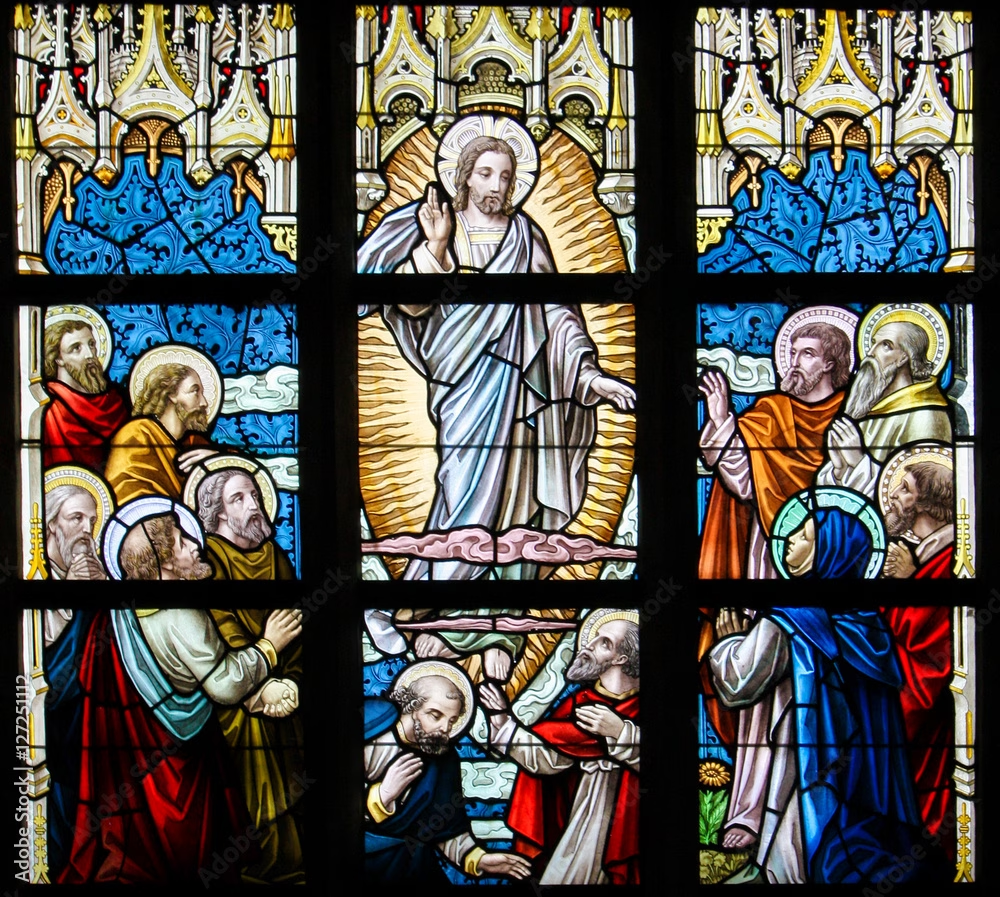
The ascension of Christ and His ongoing work reveal a truth that is both profound and deeply practical: the story of Jesus did not end with the resurrection. Rather, it continues even now, shaping our identity, our purpose, and our future. These truths are not meant to remain abstract—they are meant to transform the way we live.
When we consider the resurrection of Christ, we are reminded that His body was not merely restored but transformed. There was continuity—His disciples could recognize Him—but there were also differences. His resurrected body was no longer subject to weakness, decay, or death. This is not just a detail about Christ; it is a promise about us. Scripture tells us that we will one day be made like Him. Our present bodies, which are perishable and limited, will be transformed into something imperishable and glorious.
This future hope gives meaning to our present lives. We are not simply waiting for heaven; we are preparing for it. The life we live now has eternal significance. Every act of obedience, every moment of faithfulness, and every sacrifice made for Christ will not be wasted. Scripture reminds us that our labor in the Lord is not in vain. This is a powerful encouragement, especially when life feels difficult or unnoticed. God sees, and He remembers.
It is important to understand that rewards in God’s kingdom are not based on how impressive our lives appear to others, but on how faithful we are with what we have been given. Each person has different opportunities, abilities, and circumstances. The question is not how much we have, but what we do with it. Faithfulness in small things matters deeply to God.
Even now, something remarkable has already taken place within us. At the deepest level of our being—our spirit—we have been made new. In Christ, we are already righteous before God. This new life is meant to flow outward, transforming our minds, our emotions, and our actions. It is a process that moves from the inside out. While we are not yet perfect, God is at work in us, shaping us into the image of His Son.
There is also a future completion to this process. One day, God will fully purify us. Everything that is not of Christ will be removed, and we will be made whole. This gives us both hope and motivation. It calls us to live well now, knowing that our lives are moving toward a glorious fulfillment.
The ascension of Christ is another essential part of this story. After His resurrection, Jesus was taken up into heaven. This was not merely a symbolic act; it was a real transition from one realm to another. Scripture suggests that there is a spiritual dimension that exists alongside our physical world—a reality that we cannot normally see.
There are moments in the Bible when this hidden realm becomes visible. For example, the servant of Elisha was able to see an army of heavenly beings when God opened his eyes. Stephen, as he was being martyred, saw a vision of Christ standing at the right hand of God. These glimpses remind us that there is more to reality than what we can perceive with our senses.
When Jesus ascended, He entered this heavenly realm. He went to prepare a place for us, as He promised His disciples. This is not a vague or abstract idea. Heaven is a real place, though it exists in a dimension that we cannot fully comprehend. It is a place where we will one day dwell with Him—not as disembodied spirits, but as fully restored human beings.
This is an important point. Many people think that the ultimate goal is to escape the body and exist in a purely spiritual state. But the biblical vision is different. God created us as embodied beings, and He intends to redeem both our souls and our bodies. Our future will involve a renewed and perfected physical existence in a new creation.
The ascension also reveals something about Christ’s present role. He is seated at the right hand of God. This position is one of authority, power, and completion. When Scripture says that He is seated, it indicates that His work of redemption is finished. At the same time, it also shows that He now reigns as King.
This has direct implications for us. Because we are united with Christ, we share in His position. In a spiritual sense, we are already seated with Him in the heavenly places. This may not feel real to us, but it is a profound truth. It means that we have access to God, that we share in His authority, and that we are no longer defined by our earthly limitations.
The ascension also points forward to the future. One day, Christ will return. When He does, those who belong to Him will be gathered together with Him. The dead in Christ will be raised, and those who are alive will be transformed. This will be a moment of great reunion and fulfillment.
To better understand Christ’s ongoing work, it is helpful to consider His three offices: prophet, priest, and king. These roles help us see the fullness of who He is and what He does.
As a prophet, Christ reveals God to us. In the Old Testament, prophets spoke on behalf of God, often saying, “Thus says the Lord.” But Jesus spoke with a different authority. He did not merely relay God’s message—He spoke as God Himself. He is the ultimate revelation of the Father. To see Him is to see God.
As a priest, Christ represents us before God. In the Old Testament, priests offered sacrifices for sin. But these sacrifices were temporary; they could not fully remove sin. Jesus, however, offered Himself as the perfect sacrifice. He is both the priest and the offering. His sacrifice was once for all, and it completely satisfies the demands of justice.
Even now, He continues His priestly work by interceding for us. He prays for us, even when we do not know what to pray. He brings our needs before the Father and protects us in ways we may not even realize. This is a deeply comforting truth. We are never alone in our struggles.
As king, Christ reigns with authority. His kingdom is not limited to this world, but it will one day be fully revealed. He will return to establish His rule, and every knee will bow before Him. He is the King of kings and the Lord of lords.
These three roles were originally intended for humanity. Adam was meant to reflect God’s truth, relate to Him in worship, and exercise dominion over creation. But sin disrupted this design. In Christ, these roles are restored. He fulfills them perfectly, and through Him, we begin to share in them.
Even now, we participate in these roles in a limited way. We act as prophets when we speak the truth about Christ. We act as priests when we pray, worship, and represent others before God. And we act as kings when we exercise spiritual authority under Christ’s rule. One day, this participation will be complete.
The question, then, is not merely what Christ has done, but how we will respond. How are we living in light of these truths? Are we trusting in His finished work? Are we walking in the power of His resurrection? Are we embracing our identity in Him?
The Christian life is not about striving to become something we are not. It is about living out what is already true. In Christ, we have been given a new identity, a new power, and a new hope. The more we understand this, the more our lives will reflect His reality.
In the end, these truths call us to a deeper trust and a greater faithfulness. They remind us that our lives are part of a much larger story—a story that begins with God’s grace and ends in His glory. And in that story, nothing done for Him is ever wasted.
To explore this topic more deeply and discover how to thoughtfully answer the questions below, subscribe to Ken Boa Reflections on Substack.
Questions for Reflection
- How does knowing that Christ is already seated in authority at God’s right hand change the way I face challenges and uncertainties in my daily life?
- In what ways am I living faithfully with the opportunities, abilities, and relationships God has entrusted to me right now?
- How can I more intentionally embrace my role in Christ—as one who speaks truth (prophet), draws near to God in prayer (priest), and lives under His authority (king)?
- What would it look like for me to live today with a greater awareness of my future hope—being fully transformed and present with Christ in glory?