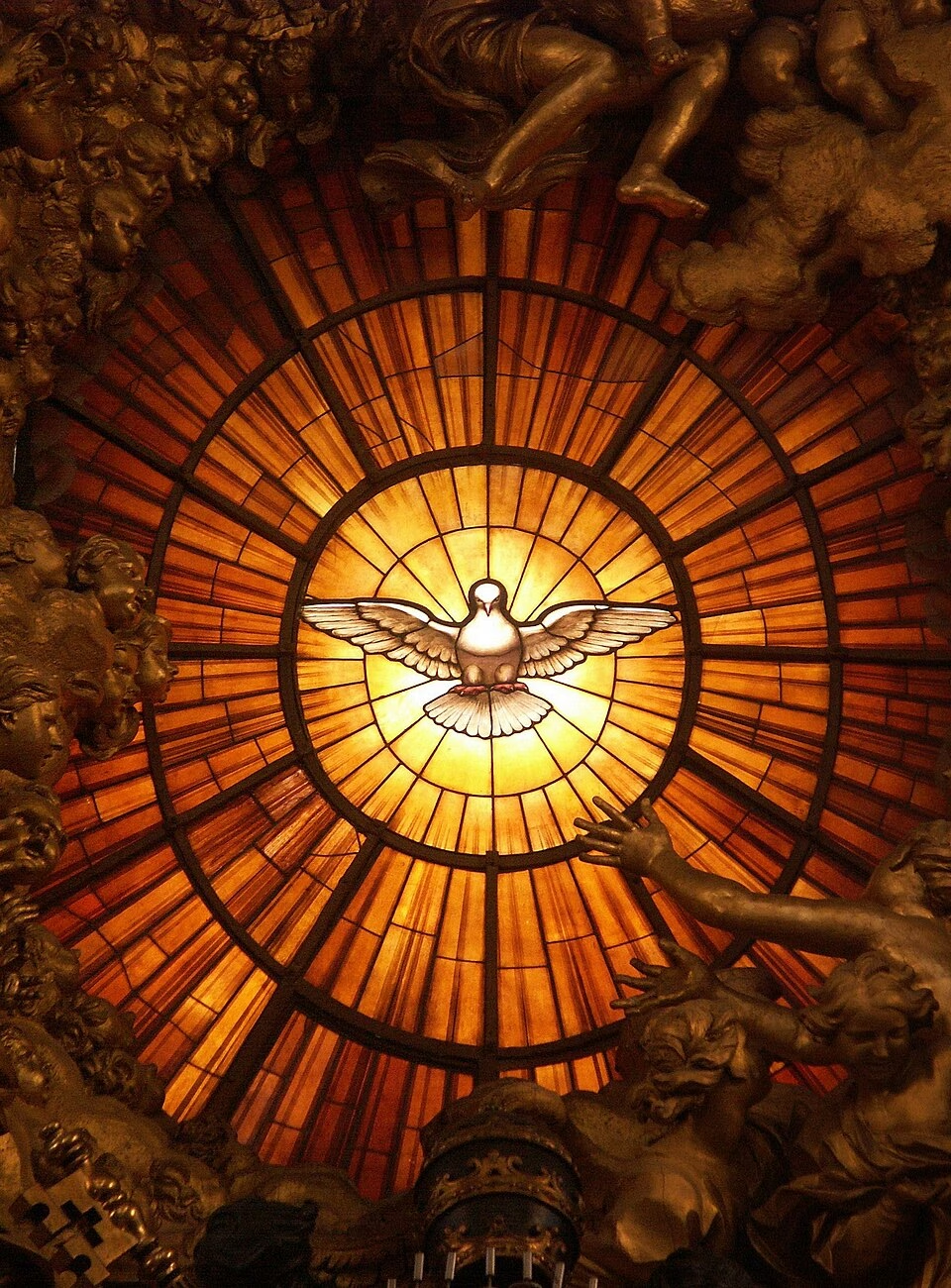
The Holy Spirit is the active presence of God in the world. In the Old Testament, God often revealed Himself through prophets, visions, and dramatic appearances known as theophanies. Men like Moses, Joshua, and Daniel experienced these manifestations of God’s power and glory. But in the New Testament, God revealed Himself most fully in Jesus Christ, the God-man. Then, after Christ’s resurrection and ascension, the Holy Spirit came at Pentecost to bring God’s abiding presence to His people.
The work of the Holy Spirit can be understood by looking back to creation itself. In Genesis, the Spirit of God moved over the face of the waters. God the Father planned creation, and the Son brought it into being, for all things were made through Him. The Holy Spirit then moved upon creation to complete and sustain it. This pattern continues throughout Scripture. The Father plans, the Son inaugurates, and the Spirit applies and fulfills.
This same pattern applies to the new creation in Christ. Through the death and resurrection of Jesus, God launched His redemptive plan. The Holy Spirit now applies this work to believers by giving spiritual life, power, and transformation. The Spirit is called the “first fruits” and the “guarantee” of our salvation (Romans 8:23). In this present age, believers experience a foretaste of the coming kingdom. We live between two worlds: one foot in the old creation and the other in the new. The kingdom of God is already present through the Spirit, but it has not yet come in its fullness.
The Old Testament anticipated this coming work of the Holy Spirit. The prophets spoke with increasing clarity about a future outpouring of God’s Spirit upon His people. Isaiah declared that a day would come when “the Spirit is poured upon us from on high” (Isaiah 32:15). This outpouring would bring righteousness, peace, and security. In Isaiah 44:3, God promises, “I will pour out My Spirit on your offspring.” Water became a powerful symbol of the Spirit because it represents life, cleansing, and refreshment. Other biblical images for the Spirit include oil, fire, and wind.
The prophets also revealed that the Holy Spirit could be grieved through rebellion and disobedience. Isaiah 63:10 warns that the people “rebelled and grieved His Holy Spirit.” The presence of the Spirit is tied to fellowship with God. Sin hinders intimacy with Him, while obedience opens the way for deeper communion.
One of the clearest Old Testament promises about the Spirit appears in Ezekiel 36:26–27. God declares, “I will give you a new heart and put a new spirit within you.” This promise points to the New Covenant. Under the Old Covenant, the law was written on tablets of stone. Under the New Covenant, God writes His law upon human hearts. The Spirit transforms believers from the inside out.
This inward transformation is essential because external religion can never change the human heart. Rules and rituals may restrain behavior for a time, but only the Holy Spirit can produce genuine spiritual life. The Spirit removes the “heart of stone” and replaces it with a “heart of flesh.” He gives believers both the desire and the power to walk in obedience.
When we come to the New Testament, we see these promises fulfilled in Jesus Christ. John the Baptist announced that Jesus would baptize people “with the Holy Spirit and fire.” Jesus Himself taught extensively about the Spirit. In John 14–16, He described the Holy Spirit as the Helper, Counselor, and Spirit of truth. The Spirit would dwell within believers, teach them, guide them, and glorify Christ.
The coming of the Holy Spirit at Pentecost marked a turning point in redemptive history. Before Pentecost, the Spirit would come upon certain individuals for special tasks. After Pentecost, the Spirit permanently indwells every believer in Christ. The Church became the temple of the Holy Spirit.
The book of Acts demonstrates the transforming power of the Spirit. Fearful disciples became bold witnesses. Ordinary people proclaimed the gospel with courage and authority. The Spirit empowered the Church for worship, fellowship, evangelism, and service.
The Holy Spirit also plays a central role in spiritual growth. He convicts us of sin, leads us into truth, and conforms us to the image of Christ. Spiritual formation is not merely self-improvement; it is the supernatural work of God within us. The Christian life is impossible apart from dependence upon the Spirit.
Paul contrasts the works of the flesh with the fruit of the Spirit in Galatians 5. The flesh produces division, impurity, jealousy, and selfish ambition. The Spirit produces love, joy, peace, patience, kindness, goodness, faithfulness, gentleness, and self-control. These qualities are not manufactured through human effort alone. They emerge from abiding in Christ and walking in the power of the Spirit.
The Spirit also equips believers with spiritual gifts for the building up of the body of Christ. These gifts vary, but they all come from the same Spirit. No believer possesses every gift, and no gift should become a source of pride. The purpose of spiritual gifts is not self-exaltation but mutual edification and loving service.
At the same time, Scripture calls believers to exercise discernment. Not every spiritual experience comes from God. The Spirit of truth always glorifies Jesus Christ and remains consistent with the Word of God. True spirituality combines openness to the Spirit with submission to Scripture.
The Holy Spirit is not merely an impersonal force or abstract power. He is a divine Person who can be grieved, resisted, and obeyed. He speaks, teaches, comforts, and intercedes for believers. Through the Spirit, we experience intimacy with the Father and participation in the life of Christ.
One of the Spirit’s greatest ministries is assurance. He bears witness with our spirit that we are children of God (Romans 8:16). In a world marked by uncertainty, suffering, and spiritual conflict, the Spirit reminds believers of God’s promises and presence.
The Spirit also empowers believers to persevere through trials. Suffering is not meaningless in the Christian life. God uses hardship to deepen our dependence upon Him and to shape our character. Even in weakness, the Spirit strengthens us and intercedes for us “with groanings too deep for words” (Romans 8:26).
Ultimately, the work of the Holy Spirit points beyond this present age to the fulfillment of God’s kingdom. The Spirit is the guarantee of the inheritance that is to come. What believers now experience in part, they will one day experience in fullness.
The Christian life, then, is a life of dependence upon the Holy Spirit. We cannot live the life God calls us to live in our own strength. The Spirit empowers us to know Christ, to love others, to resist sin, and to walk in obedience.
As believers yield to the Holy Spirit, they become instruments through whom the presence of God is made visible in the world. The Spirit completes and sustains what the Father planned and what the Son began. Through His indwelling presence, the people of God become participants in the new creation even now, while awaiting the fullness of the age to come.
To explore this topic more deeply and discover how to thoughtfully answer the questions below, subscribe to Ken Boa Reflections on Substack.
Questions for Reflection
- What does it mean to you that the Holy Spirit is the active presence of God in your daily life? How might this truth change the way you approach your relationship with God?
- Ezekiel 36:26–27 speaks about God giving us a new heart and placing His Spirit within us. In what areas of your life do you most need the transforming work of the Holy Spirit today?
- Paul contrasts the works of the flesh with the fruit of the Spirit in Galatians 5. Which aspect of the fruit of the Spirit do you most desire to see cultivated in your life, and why?
- The Holy Spirit empowers believers to live between the “already” and the “not yet” of God’s kingdom. How can you more intentionally depend upon the Spirit as you wait for the fullness of God’s promises?